MORGAN GATES, PHD CANDIDATE
  • Home
  • Teaching
  • Research
  • Public Humanities
  • About Me
  • Contact

Courses &
Philosophy of Teaching

Morgan's Courses

Picture
LIT 154: Literature and the Arts:
Listening and Music

Picture
LIT 80: Literature and Musical Genre
Picture
LIT X: Sounds Like (American) SF
Picture
ENG 200: Introduction to Literature:
Crime / Justice in American Literature
Picture
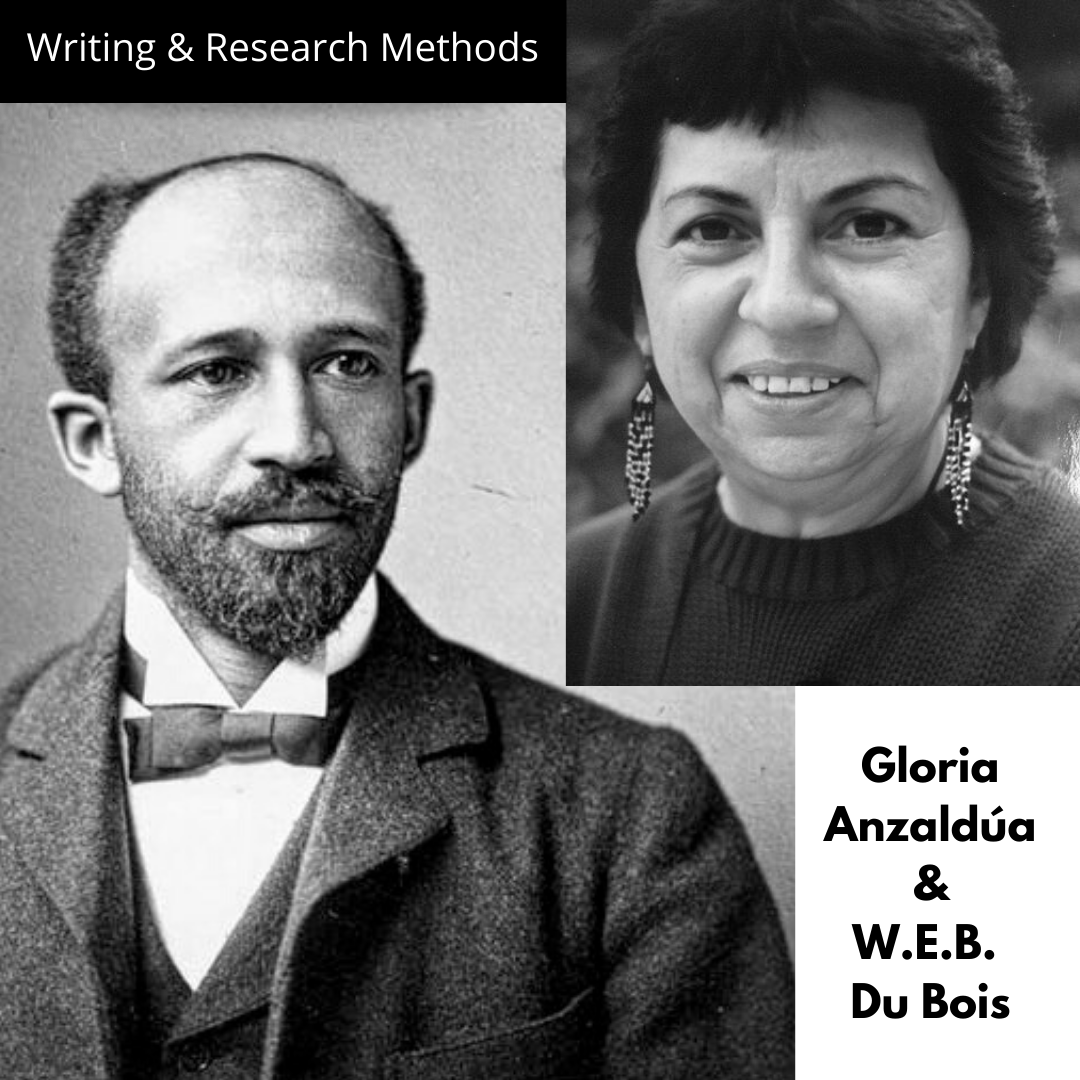
LIT 61W: Writing and Research Methods:
Gloria AnzaldĂșa & W.E.B. Du Bois
Picture
RWS 200: Rhetoric of the Written Argument in Context:
Human / Animal / Environment
Picture
RWS 100: Rhetoric of the Written Argument:
Digital Literacy

Philosophy of Teaching

Literature is an inexhaustible field of study through which anyone open to learning can enrich their personal, professional, academic, communal, and civic lives, and effective writing and communication skills are powerful tools for personal, professional, academic, and communal success.

I teach literature and composition because I have a passion for learning, a fascination with the possibilities of language, and deep respect for human need to hear and tell stories and communicate effectively more broadly. I also teach literature and composition to prepare students to learn skills to interpret the textual world more effectively, to be contemplative, to communicate and advocate successfully for the significance of their observations, and — crucially — to appreciate the observations of others by reading, viewing, and listening. Learning skills to interpret the textual world in which students live, in and beyond the classroom, is a life skill that will help students navigate their worlds. Appreciating the observations of others and advocating effectively for one’s own position are skills that promote healthy relationships and foster understanding across differences. For students to learn these skills, I cultivate a secure learning environment, provide accessible and adaptable instruction, diverse assessments, growth-minded feedback, and learning goals that are consistently present, transparent, and achievable.

For learning to happen in a classroom, community must be built. That community must be secure, responsive, and responsible. It sounds obvious, but it is truly worth saying. My first step in community building is to learn students's names through discussion, to invite them to introduce themselves, and to use other student’s names when responding to points raised. I am also responsive to my own observations and encourage reluctant students to join class discussion (or pass on the opportunity). In small group discussions and activities, I guide students to self-monitor our community and self-form small groups by pausing to look around and invite more reserved folks to join them. Qualitative feedback in my student evaluations frequently notes my strength in building community.  

Accessible, transparent, structured, and clear instruction that is engaged with best practices is vital to learning. In the classroom, I always utilize visual technology, like white boards, projectors and slides, to reinforce key lecture concepts, make activity instructions and discussion questions visible and amendable for clarity, and to document group thought. To be transparent, my slides always begin with the day’s classroom agenda and notes about what course learning goals are relevant to that day’s activities. Before we meet in the classroom, via LMS systems, I provide students with low stakes engagement activities that preview a particular question or passage to be discussed in class. They require some initial reflection so that students are (and feel) prepared in the classroom. These structure the day-to-day work done at home and then in class, as well as scaffold assignments. No matter the type of assessment, I utilize and provide transparent rubrics with criteria directly connected to learning goals so that students always know how they will be assessed and why.

To engage students in learning, my courses are designed to allow for student autonomy within the framework of the course. Autonomy can mean that I provide them with a choice of prompts that fulfill assessment criteria. It can also mean students choose which texts or topics will be the focus of their assignments. It might mean that they are also expected to introduce materials of interest to them and bring those in conversation with the course. Sometimes the mode of assignment delivery -- written, oral, multimedia, etc -- is an option as well. I begin each course with a syllabus engagement activity via google docs commenting that requires students to engage with the syllabus: to ask one question they have about the syllabus or offer a comment about it and to add a personal learning goal to the course learning goals. 

To cultivate student success and facilitate learning, students must frequently be provided with feedback that is tailored, growth-minded, and structured. Though every assessment includes feedback through the rubric, I rely on more than rubrics to communicate where students are at and how they can grow skills. I frequently provide written, growth-minded feedback that celebrates strengths and targets areas of growth, always for high stakes assessments. This feedback also models academic ethos and professional communication. It clearly maps back to the rubric and their work. In high stakes assignment feedback, I highlight models of excellence and areas growth directly in the student’s own work first. In low stakes work, I engage with a mix of tailored feedback, provide my own examples of more successful completion, and / or point students to resources with models. Because writing is often a hard, complex, vulnerable act, and deeply tied to senses of self, I am also very careful to use language that centers the work and the skill, and not the person. For example, rather than saying “You needed to contextualize quotes,” I say, “The essay needed to contextualize quotes.” Qualitative and quantitative feedback in my evaluations frequently highlight feedback as one of my pedagogical strengths. 

Instructors must be open to receiving, processing and implementing useful feedback. For my own learning and pedagogical growth and as a faculty member, I take my student evaluations seriously. I devote a small but engaged amount of class time to discussing them frankly with students. Often this means de-mystifying how institutions use them, how I use them, and exploring student’s feelings and thoughts about them. I show students what they look like when I receive them. I point to useful feedback versus less useful. I encourage them to use the same practices I employ in providing feedback — make a clear assessment, support it with reasoning and examples, and offer actionable strategies. I also make a pit-stop to discuss gendered language in evaluations through a visualization tool that maps how words like “smart” or “organized” or “effective” show up across evaluations by gender. 

Since, in my experience, evaluation forms are the same across divisions, departments, and classes, I include tailored questions on my student evaluations (through mechanisms made available via student evaluation services). These allow students to speak more directly to my duties or document their assessment of my teaching of key learning goals. For example, a learning goal that traverses all of my classes, no matter the content, is to be better listeners. Listening in my classes is often interchangeable with reading or viewing as active processes of engagement, observation, and analysis. It is also a community building skill and a transferable skill. So I include a question that asks them to assess if, how, and in what ways the class did or did not help them grow listening skills. When I recently posed this question, 70% of students included commentary describing how they became more “conscious,” “active,” skilled, critical, and intentional listeners and readers. And, though I aim for that number to go up, this was music to my ears!

To be successful in teaching, instructors must be both leaders and team members. Within the classroom the instructor must be a leader that flexibly responds to the idiosyncrasies of the classroom environment. They, I, must also be a leader outside of the classroom through advising and being knowledgeable about the campus and its resources. Composition instructors are also uniquely positioned as both team-members and leaders through their wide contact with the student body. Because composition is a foundational skill and often serves as a mode of assessment across departments, when we do our work with excellence, students and other faculty can do their work with excellence. Instructors must also be team members within their departments through participating in governance, committee work, advising, mentorship, and accreditation processes. I also believe firmly that the crossing of teamwork and leadership should extend to the larger community through projects that bring together community organizations and academic institutions and through programming that honors and welcomes the community.

Instruction is successful when everyone is engaged, motivated, and learning -- including myself. Finally, one of my most valuable teaching philosophy theses is that I am in the blessed position to design — not only meaningful student learning experiences but — my own work, even if that design is within pre-established frameworks of a writing program or general education objectives. I am free to design work that is enjoyable, sustaining, motivating, and inspiring for students and myself. This realization has informed my course designs, which often culminate in creative-critical or public-facing projects that demonstrate student learning and offer students autonomy over how they demonstrate that learning. My class on sound and speculative fiction was a standout for this realization. Within the project framework, students produced robot-horror dramas, broadcast soundscapes of a post-apocalyptic Santa Cruz or alien inspired remixes of the Voyager Golden Record (on KZSC 88.1 FM), and produced podcasts analyzing alien sound ecologies in films like Happy Feet. It was thrilling to participate in their work. With a principle of design that considers the student and myself, I can honestly say at the end of the term (and throughout) that I am really looking forward to the experience and process of grading.
  • Home
  • Teaching
  • Research
  • Public Humanities
  • About Me
  • Contact